I spent the weekend in a nostalgic haze of the Body Shop's 'White Musk'. I'd sniffed it on someone this week, and got one of those immediate scent memories that dragged me all the way back to 6th form English, where every second girl in the class (including me) was drenched in the stuff.
Today, it smells strangely old-lady for such a classic starter perfume (there were, of course, no 'by Taylor Swifts' or 'by Beyonces' or 'by Britney Spears' back in my day). It's got a big white flower, and then a big musk (the clean laundry variety, not the dirty sheets) and underneath it all a powdery sweet cosmeticy note. It's as sweet as all get out, and kind of soothing.
Wondering around snuffing at my wrists (I spend rather a lot of time doing this) I got to thinking about my year in perfume. It's a vain pleasure, sure, but one that pleases me deeply.
Summer was spent drenched in Guerlain's Vetiver - sharply, freshly green, a cold spice smell (if you can imagine that: not cardamom or star anise - green, yet with that same intensity), that makes me think of the very innermost leaves of a blade of plucked grass, cast in crystal.
When I felt like a change I'd swop to Guerlain's Mitsouko, which I find pleasingly sharp, almost aggressive - the angular cousin of Jicky (see the next paragraph), beautiful in its own way but far less eager to please.
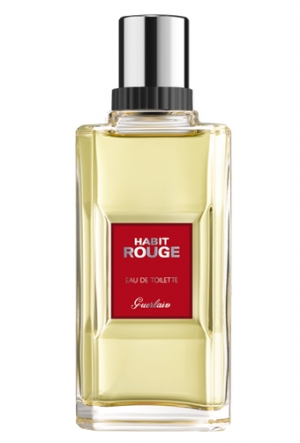
Winter was spent alternating between Guerlain's men's cologne Habit Rouge (I can't top Luca Turin's description of it smelling like 'sweet dust') and their classic women's fragrance Jicky - apparently the oldest perfume in continuous production.
I love the progression of Jicky - a big hit of lavender, then a very weird moment where it smells like curdled milk, then a deep purple oily cloud where the lavender is balanced with vanilla, with an underpinning of dried herbs - a salty lick under all the sweetness.
On a visit to Melbourne (and more specifically, the magical Klein's Perfumery) I added to my collection with Frapin's Terre de Sarment - a rich blend of woodsmoke and vanilla freshened by dollops of citrus, with an underlying note of booziness, more whiskey or bourbon than berried wine. It smells like the night after the pub, in the best possible way.
I also gave in to L'Artisan Parfumeur's 'Dzing', which smells like vanilla-drenched manila folders with a strange musk underpinning. It's a very odd smell, curiously flat (not lacking fizz, but flat like a huge roll of butcher's paper - a single, uninflected surface) but I find it compelling.
During the year, I also experimented with a bunch of samples of leather perfumes, drawn from Turin's top 10 list: Estee Lauder's 'Azuree' (work glove and citrus), Chanel's Cuir de Russie (amazing, impossible to find here) and S Perfumes S-eX (does what it says on the bottle). I couldn't find one that I could wear (as opposed to it wearing me) so I'm saving that up for when I'm an irascible old lady with a lip full of snuff and no qualms about being thought odd.
But the perfume that blew me away, that lingers, that delights every day, is L'Artisan Parfumeur's Timbuktu. Turin describes it as woody smoky - I get less of either of these than an incredibly clear, bright shaft of pink peppercorns - but it's taught me what he means by 'radiance', a smell that sings out like a cleanly plucked note. I can't wear it myself (not yet, anyway) but luckily someone else in the house can.
What's next? There are some Chanels I'm still very keen to lay nose on: Bois de Iles, Sycomore. I've been ummming and aahing about a bottle of Eau Sauvage all year; that or maybe Guerlain's Eau de Cologne for an alternate summer scent (yes, Guerlain is a bit of a theme here, but in terms of readily accessible, high quality perfumes, they're our best option). I might put more effort into exploring Serge Lutens. Overall, I'll continue to feed my healthy little obsession.
Thursday, 15 December 2011
Wednesday, 14 December 2011
Not remembering Don Driver
Today I talked on the radio about Don Driver and his work.
I wish I could have thought of a better short title than 'Remembering Don Driver'. It's the traditional wording, but it implies that you're dragging stuff up from the depths of your memory, which is wrong on two counts for me. First, I never (to my great regret) met Driver, so I'm not recalling personal memories. And second, there is nothing at all past tense about how I feel about Driver's work: it is vital and fresh, and I strongly believe only continue to become more eye-smacking as time passes.
Anyway - here's the audio, should you want to have a listen.
There's also a gallery of images on the RadioNZ website.
I wish I could have thought of a better short title than 'Remembering Don Driver'. It's the traditional wording, but it implies that you're dragging stuff up from the depths of your memory, which is wrong on two counts for me. First, I never (to my great regret) met Driver, so I'm not recalling personal memories. And second, there is nothing at all past tense about how I feel about Driver's work: it is vital and fresh, and I strongly believe only continue to become more eye-smacking as time passes.
Anyway - here's the audio, should you want to have a listen.
There's also a gallery of images on the RadioNZ website.
Judging a book
Two takes on the resurgence of beautifully designed and printed print books: The Guardian takes the high road, the New York Times goes straight for the commercial jugular.
Both note that the print market is having to differentiate itself from the e-market in order to survive (and make money). A year on from first having a whirl with a Kindle, I'm still a resolute print-book reader and buyer.
I still read print books because the public library can supply (almost all) my needs. It's still cheaper for me to reserve a book I want through the library than to download it from Amazon, and because my reading backlist is so long, I don't feel like I'm missing out by not having it now.
My print buying has tailed off mostly to YA fiction (cheaper than 'adult' books), new releases by my favourite authors (completist urges) and essay collections (no real reason, there's just something I like about them). I buy very few books that I haven't already read. In fact, I buy books largely in order to loan them - there's something irreplaceable, for me, about the physical act of handing over a book for someone else to love. I haven't (more shame me) bought an art book all year.
Some people have photo albums. I have bookshelves: even without cracking them open, my books remind me of people and places and moments in my life; where and when I read them, who I was at that time, who I shared them with. Plus, yeah - they do smell good.
Both note that the print market is having to differentiate itself from the e-market in order to survive (and make money). A year on from first having a whirl with a Kindle, I'm still a resolute print-book reader and buyer.
I still read print books because the public library can supply (almost all) my needs. It's still cheaper for me to reserve a book I want through the library than to download it from Amazon, and because my reading backlist is so long, I don't feel like I'm missing out by not having it now.
My print buying has tailed off mostly to YA fiction (cheaper than 'adult' books), new releases by my favourite authors (completist urges) and essay collections (no real reason, there's just something I like about them). I buy very few books that I haven't already read. In fact, I buy books largely in order to loan them - there's something irreplaceable, for me, about the physical act of handing over a book for someone else to love. I haven't (more shame me) bought an art book all year.
Some people have photo albums. I have bookshelves: even without cracking them open, my books remind me of people and places and moments in my life; where and when I read them, who I was at that time, who I shared them with. Plus, yeah - they do smell good.
Monday, 12 December 2011
Fritsch in Chch
The National has a simply glorious looking show of Karl Fritsch's work on at the moment. Not only do the pieces look terrific, but his characteristically rough-edged yet elegant displays look just as good. Go visit and shop, if you can.
Saturday, 10 December 2011
Some chewy weekend reading
James Bridle's WebDirections keynote on 'The New Aesthetic' (video and transcript - the transcript is awesomely annotated with links to images and articles).
A nice bookend to the above - Russell Davies on the post-digital.
Relevant to PBRF funding in universities: Mark Bauerlein asks in The Chronicle of Higher Education whether all the publishing in the field of literary studies is actually benefiting anyone.
Michelle Nijhuis in 'The Last Word on Nothing' (an awesome science blog) on the the different narrative styles of environmental reporting (Quest, Rebirth, Tragedy, Rags to Riches).
Aimee Levitt on Laura Ingalls Wilder and American economic downturns.
A nice bookend to the above - Russell Davies on the post-digital.
Relevant to PBRF funding in universities: Mark Bauerlein asks in The Chronicle of Higher Education whether all the publishing in the field of literary studies is actually benefiting anyone.
Michelle Nijhuis in 'The Last Word on Nothing' (an awesome science blog) on the the different narrative styles of environmental reporting (Quest, Rebirth, Tragedy, Rags to Riches).
Aimee Levitt on Laura Ingalls Wilder and American economic downturns.
Thursday, 8 December 2011
Don Driver
Jim Barr and Mary Barr have written beautifully on Don Driver, who died today.
I never met Don Driver. It makes me sad. Over the last few years I've become a fervent admirer, seeking out as many shows and opportunities to see the work as possible (and opportunities to mention him here and when on the radio).
Driver's work holds the room. It squawks and it growls and it sings (and occasionally it's quite trippy) but it's impossible to look past. It grabs your eyeballs and it makes you think.
I owe five people real credit for my love of Driver's work: Jim and Mary, William McAloon, Julian Dashper and Hamish McKay. It's a delight to see curators my age (or thereabouts) taking up his work as well - Aaron Kreisler in Dunedin (a NP kid himself), Aaron Lister in his sculpture show at City Gallery next year. People have been saying today that Driver is sadly overlooked. Me, I think he was loved and admired where it mattered.
(Having said that - a dirty great survey show would not go amiss.)
UPDATE: That first 'Aaron' should have been Kreisler - sorry, both. And Sarah Farrar has written a nice short piece about Driver and her own discovery of his work (another one of those young curators) on the Te Papa blog. And Roger Taberner has written a lengthy and insightful piece on the Auckland Art Gallery blog.
I never met Don Driver. It makes me sad. Over the last few years I've become a fervent admirer, seeking out as many shows and opportunities to see the work as possible (and opportunities to mention him here and when on the radio).
Driver's work holds the room. It squawks and it growls and it sings (and occasionally it's quite trippy) but it's impossible to look past. It grabs your eyeballs and it makes you think.
I owe five people real credit for my love of Driver's work: Jim and Mary, William McAloon, Julian Dashper and Hamish McKay. It's a delight to see curators my age (or thereabouts) taking up his work as well - Aaron Kreisler in Dunedin (a NP kid himself), Aaron Lister in his sculpture show at City Gallery next year. People have been saying today that Driver is sadly overlooked. Me, I think he was loved and admired where it mattered.
(Having said that - a dirty great survey show would not go amiss.)
UPDATE: That first 'Aaron' should have been Kreisler - sorry, both. And Sarah Farrar has written a nice short piece about Driver and her own discovery of his work (another one of those young curators) on the Te Papa blog. And Roger Taberner has written a lengthy and insightful piece on the Auckland Art Gallery blog.
Pretty ... smart
I've been oohing and aahing over Australian jewellery gallery Pieces of Eight's recently-launched online store Edition X, which stocks limited edition pieces of jewellery, textiles, books, objects and more.
In addition to the seductiveness of the objects, I've been seduced by the little design touches on the website; feminine, not too girly, and a strong sense of the Pieces of Eight personality.
Now eg.etal, another of my favourite Melbourne haunts, as also launched an online store.
Although eg.etal's stock doesn't quite delight me as Pieces of Eight does, the site also has some really lovely, simple touches - like how the thumbnails on the homepage react as you scroll over them.
Now all I need is for Gallery Funaki to make my life complete.
In addition to the seductiveness of the objects, I've been seduced by the little design touches on the website; feminine, not too girly, and a strong sense of the Pieces of Eight personality.
Now eg.etal, another of my favourite Melbourne haunts, as also launched an online store.
Although eg.etal's stock doesn't quite delight me as Pieces of Eight does, the site also has some really lovely, simple touches - like how the thumbnails on the homepage react as you scroll over them.
Now all I need is for Gallery Funaki to make my life complete.
Wednesday, 7 December 2011
City Gallery Wellington's Future - The Survey
When I saw the announcement of Paula Savage's retirement from City Gallery in their enewsletter, and an invitation to take a survey on the future of the Gallery, I was quite excited. Would they give us a multi-choice list of potential directors to choose from? Could I ask for a larger number of smaller, shorter-run exhibitions throughout the year? Could I tell them about the public programme events I want to attend?
Nope. But you can tell them what you think about the idea of a $10 entry fee for anyone who can't prove Wellington residency to visit City Gallery Wellington and the Museum of City and Sea.
Some sample questions:
Nope. But you can tell them what you think about the idea of a $10 entry fee for anyone who can't prove Wellington residency to visit City Gallery Wellington and the Museum of City and Sea.
Some sample questions:
After all these days
It's been a couple of weeks now, and I'm still loving NPR's Infinite Player (original post here).
Usually, the glow of new internet toys wears off pretty quickly (or I bookmark things and never return). But I've just kept the Infinite Player alive in a browser window, switching it on whenever I want a little bit of background chatter (like right now). It's less commitment than a podcast, but more varied and controllable than normal radio. Joy.
Tuesday, 6 December 2011
Sport and cancer
Yeah, I think it's a weird pairing too. Never mind.
First, a fantastic profile of Siddartha Mukherjee, oncologist and author of The Emperor of All Maladies: A Biography of Cancer, one of the best on-fiction books I read this year (even if the second half does drag somewhat).
I got all riled up on behalf of (American) football fans when I read this WSJ article about how the NFL will not release the 'All 22' footage - the angles that show what all the players on the field are up to during the game - to fans.
And a rather good list of the top sports books of 2011 from Dan Shanoff on Quickish, interesting also for this final observation, his prediction for sports publishing in 2012:
First, a fantastic profile of Siddartha Mukherjee, oncologist and author of The Emperor of All Maladies: A Biography of Cancer, one of the best on-fiction books I read this year (even if the second half does drag somewhat).
One of its most arresting observations was inspired by a conversation between Mukherjee and a friend many years earlier "about the nature of interior and exterior", which returned to him as he was working on the book. "Every era," it suddenly struck him, "casts cancer in its own image." The US in the 70s was haunted by cold war fears of the enemy within – and so the "big bomb" was replaced by "the big C". HIV overshadowed the following decade, and then the search for cancer-causing viruses became oncology's new obsession. Now that we're obsessed with genetics, the focus of research has moved on to hereditary causes. "When a disease insinuates itself so potently into the imagination of an era," he writes, "it is often because it impinges on an anxiety latent within that imagination."
I got all riled up on behalf of (American) football fans when I read this WSJ article about how the NFL will not release the 'All 22' footage - the angles that show what all the players on the field are up to during the game - to fans.
By distributing this footage only to NFL teams, and rationing it out carefully to its TV partners and on its web site, the NFL has created a paradox. The most-watched sport in the U.S. is also arguably the least understood. "I don't think you can get a full understanding without watching the entirety of the game," says former head coach Bill Parcells. The zoomed-in footage on TV broadcasts, he says, only shows a "fragment" of what happens on the field.
And a rather good list of the top sports books of 2011 from Dan Shanoff on Quickish, interesting also for this final observation, his prediction for sports publishing in 2012:
Shorter-form (and quick-turnaround) e-books from "indie" publishers like Byliner and Atavist; from sportswriters publishing on their own; from mainstream publishing houses (including Amazon, foreshadowed by Emma Span and Ben Cohen); and -- most interestingly -- directly from mainstream sports media companies (taking a cue from what The Atlantic did with Taylor Branch's cover story this fall and Politico's e-book strategy, which made its first surge this week) will explode.
Friday, 2 December 2011
Sparkly
I'm quite taken by the Walker Art Center's new homepage.
Some people will find it way too busy. Me, I like how they seem to have expanded their remit - not just a homepage for their gallery, but a homepage for the visual and performing arts. I like, for example, how articles from other sites are getting pulled through to the page.
I also like all the small touches - little features where you can flick through three panes, the three views for opening hours, this little feature on the far left that highlights different content by theme.
It's a bit super-user, but I enjoy how it rewards exploration. The more you adventure through it, the more it reveals to you - a nice metaphor for art itself, no?
Some people will find it way too busy. Me, I like how they seem to have expanded their remit - not just a homepage for their gallery, but a homepage for the visual and performing arts. I like, for example, how articles from other sites are getting pulled through to the page.
I also like all the small touches - little features where you can flick through three panes, the three views for opening hours, this little feature on the far left that highlights different content by theme.
It's a bit super-user, but I enjoy how it rewards exploration. The more you adventure through it, the more it reveals to you - a nice metaphor for art itself, no?
Thursday, 1 December 2011
The day after
I hope to write something more reflective about the NDF conference in the next few weeks. Overall, I couldn't be happier with how it all turned out: fantastic speakers, a highly engaged audience, and - miracle of miracles - sunshine.
I slipped out just before lunch on the second day of the conference to do my regular spot on Nine to Noon, and covered some of the projects featured at the conference. The way Kathryn was immediately sucked in by some of the sites we talked about reinforced for me some of the messages we heard at the conference about helping people sense the texture and colour of our collections.
Here are links to the sites I touched on:
Old Weather, National Maritime Museum, London http://www.oldweather.org/
A citizen-science project where volunteers are helping transcribe the logbooks of Royal Navy ships from around the time of World War One.
What's on the menu, New York Public Library http://menus.nypl.org/
Learning what people were eating a century ago in New York by transcribing NYPL's special collection of historical menus.
Australian Dress Register http://www.australiandressregister.org/
Collecting examples and information about clothing in New South Wales before 1945, from public and private collections.
History Pin - http://www.historypin.com/
A global map for sharing pieces of people's personal histories to create a global resource
Remix and Mash up competitions:
[New Zealand] Mix and Mash winners http://www.mixandmash.org.nz/2011-winners/
[Australia] LibraryHack winners http://libraryhack.org/2011/06/25/the-winners/
A Grand Mother from Candy Elsmore on Vimeo.
I slipped out just before lunch on the second day of the conference to do my regular spot on Nine to Noon, and covered some of the projects featured at the conference. The way Kathryn was immediately sucked in by some of the sites we talked about reinforced for me some of the messages we heard at the conference about helping people sense the texture and colour of our collections.
Here are links to the sites I touched on:
Old Weather, National Maritime Museum, London http://www.oldweather.org/
A citizen-science project where volunteers are helping transcribe the logbooks of Royal Navy ships from around the time of World War One.
What's on the menu, New York Public Library http://menus.nypl.org/
Learning what people were eating a century ago in New York by transcribing NYPL's special collection of historical menus.
Australian Dress Register http://www.australiandressregister.org/
Collecting examples and information about clothing in New South Wales before 1945, from public and private collections.
History Pin - http://www.historypin.com/
A global map for sharing pieces of people's personal histories to create a global resource
Remix and Mash up competitions:
[New Zealand] Mix and Mash winners http://www.mixandmash.org.nz/2011-winners/
[Australia] LibraryHack winners http://libraryhack.org/2011/06/25/the-winners/
A Grand Mother from Candy Elsmore on Vimeo.
Subscribe to:
Posts (Atom)


