A year-long feasibility study, commissioned by the City of Helsinki and done by the Solomon R. Guggenheim Museum, has concluded that yes, building a Guggenheim Museum in Finland would aid Helsinki in its efforts to become a cultural capital.
Which makes me think - why Te Papa North? Why not Guggenheim South?
Wednesday, 11 January 2012

Tuesday, 10 January 2012
Let me through, I'm a curator
George Clooney has announced that his next movie 'will be the World War II story “The Monuments Men,” a look at the art
historians who landed at Normandy to rescue art looted by Adolf Hitler.' Clooney will both star and direct.
There's plenty of material to work with, with 11 civilians drafted to rescue Europe's artistic treasures, two deaths and a love story involving a woman who was part of the French resistance. One can only hope this will all result in an art-themed Ryan Gosling tumblr.
There's plenty of material to work with, with 11 civilians drafted to rescue Europe's artistic treasures, two deaths and a love story involving a woman who was part of the French resistance. One can only hope this will all result in an art-themed Ryan Gosling tumblr.
Wednesday, 4 January 2012
Another reading update
I forgot to say I abandoned Testament of Youth (Vera Brittain's memoir of growing up before, through and after World War One) even though I felt like both a traitor to the sisterhood and a real jerk doing so.
I ground it out all the way to the end of Mary Gabriel's Love and Capital: Karl and Jenny Marx and the Birth of a Revolution, not because I liked it (or them) but because I was learning a lot about a subject I turned out to know woefully little about.
I flew through Madeline Miller's debut novel The Song of Achilles, a retelling of the Iliad that focuses on the love story between Achilles and Patroclus (which I loved, until it realised it had Twilight overtones - though at least A and P have it off frequently - at which point I was overcome with doubts).
And I also ripped through the first book in George R. R. Martin's Game of Thrones series, which was pretty much exactly what I expected, with less sex, and didn't really need me to add my opinions to the overflowing seas of opinion and intrigue which surrounds it.
Now on the go: Stephen Greenblatt's 'The Swerve' (taking the place of the essay collections I originally twigged, because the library delivered it up faster than expected). And made happy by the news that there's a new Michael Chabon coming out this year, I think I'm going to re-read 'The Yiddish Policemen's Union', which is, I think, my favourite of his books (after 'Summerlands').
I ground it out all the way to the end of Mary Gabriel's Love and Capital: Karl and Jenny Marx and the Birth of a Revolution, not because I liked it (or them) but because I was learning a lot about a subject I turned out to know woefully little about.
I flew through Madeline Miller's debut novel The Song of Achilles, a retelling of the Iliad that focuses on the love story between Achilles and Patroclus (which I loved, until it realised it had Twilight overtones - though at least A and P have it off frequently - at which point I was overcome with doubts).
And I also ripped through the first book in George R. R. Martin's Game of Thrones series, which was pretty much exactly what I expected, with less sex, and didn't really need me to add my opinions to the overflowing seas of opinion and intrigue which surrounds it.
Now on the go: Stephen Greenblatt's 'The Swerve' (taking the place of the essay collections I originally twigged, because the library delivered it up faster than expected). And made happy by the news that there's a new Michael Chabon coming out this year, I think I'm going to re-read 'The Yiddish Policemen's Union', which is, I think, my favourite of his books (after 'Summerlands').
Saturday, 31 December 2011
A reading update
Because you never know, you may be interested:
Patrick Ness, A Monster Calls (impulsive insert) four stars[would have been three, but for the brilliant illustrations and the sheer production values]
Jennifer Egan, A Visit from the Goon Squad (on the original list) just as good as everyone says it is
Maggie Stiefvater, The Scorpio Races (impulsive insert) four stars
Vera Brittain, Testament of Youth (on the original list) abandoned, one star
Mal Peet, Life: An Exploded Diagram (on the original list) five stars
I'm still grinding my way through Mary Gabriel's biography of Jenn and Karl Marx, finding Karl Marx thoroughly exasperating but learning too much to put it down, and am about to embark on another impulse addition, Madeline Miller's The Song of Achilles.
Patrick Ness, A Monster Calls (impulsive insert) four stars[would have been three, but for the brilliant illustrations and the sheer production values]
Jennifer Egan, A Visit from the Goon Squad (on the original list) just as good as everyone says it is
Maggie Stiefvater, The Scorpio Races (impulsive insert) four stars
Vera Brittain, Testament of Youth (on the original list) abandoned, one star
Mal Peet, Life: An Exploded Diagram (on the original list) five stars
I'm still grinding my way through Mary Gabriel's biography of Jenn and Karl Marx, finding Karl Marx thoroughly exasperating but learning too much to put it down, and am about to embark on another impulse addition, Madeline Miller's The Song of Achilles.
Saturday, 24 December 2011
Christmas reading
Here's my list:
Fiction
Fiction
- George R. R. Martin, A Game of Thrones
- Mal Peet, Life: An Exploded Diagram
- Jennifer Egan, A Visit from the Goon Squad
- John Jeremiah Sullivan, Pulphead
- Best American Science Writing 2011
- Vera Brittain, Testament of Youth [in progress, perilously close to being ditched]
- Pippin Barr, How to play a video game
- Stephen Greenblatt, The Swerve: How the Renaissance Began
- Mary Gabriel, Love and Capital: Karl and Jenny Marx and the birth of a revolution
Friday, 23 December 2011
Bob Semple, heart throb
Diving around the National Library's collections the other day, I stumbled across Robert Semple.
I knew about the Semple tank, of course, but I had no idea Semple (coal miner, trade unionist, mine inspector, Labour MP, Minister for Public Works and Transport) was such a hottie.


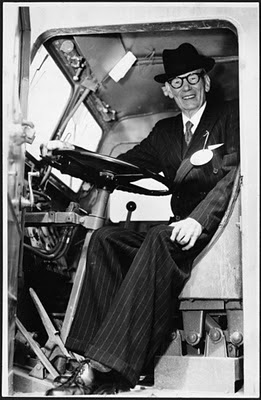
Obviously a bit of a show man, then. I wanted to add Mr Semple to My Daguerrotype Boyfriend, but their T&Cs scared me off. So I've put these here for you instead.
Images, from top
Gaze, Henry Edward 1874-1953. Portrait of Robert Semple. Gaze, Henry Edward :Negatives. Ref: 1/2-174828-G. Alexander Turnbull Library, Wellington, New Zealand. http://beta.natlib.govt.nz/records/23140679
Creator unknown :Photograph of Robert Semple. Ref: PAColl-7985-79. Alexander Turnbull Library, Wellington, New Zealand. http://beta.natlib.govt.nz/records/22549597
Pratt, J, fl 1974. Pratt, J, fl 1974 :Photograph of tank designed by Robert Semple. Ref: 1/2-050790-F. Alexander Turnbull Library, Wellington, New Zealand. http://beta.natlib.govt.nz/records/23112325
Robert Semple. Ref: 1/2-044054-F. Alexander Turnbull Library, Wellington, New Zealand. http://beta.natlib.govt.nz/records/23129598
Robert Semple, former Minister of Public Works, at the controls of an earth-moving machine, Berhampore. Dominion post (Newspaper) :Photographic negatives and prints of the Evening Post and Dominion newspapers. Ref: EP-NZ Obits-Se to Sh-01. Alexander Turnbull Library, Wellington, New Zealand. http://beta.natlib.govt.nz/records/22787201
I knew about the Semple tank, of course, but I had no idea Semple (coal miner, trade unionist, mine inspector, Labour MP, Minister for Public Works and Transport) was such a hottie.
Obviously a bit of a show man, then. I wanted to add Mr Semple to My Daguerrotype Boyfriend, but their T&Cs scared me off. So I've put these here for you instead.
Images, from top
Gaze, Henry Edward 1874-1953. Portrait of Robert Semple. Gaze, Henry Edward :Negatives. Ref: 1/2-174828-G. Alexander Turnbull Library, Wellington, New Zealand. http://beta.natlib.govt.nz/records/23140679
Creator unknown :Photograph of Robert Semple. Ref: PAColl-7985-79. Alexander Turnbull Library, Wellington, New Zealand. http://beta.natlib.govt.nz/records/22549597
Pratt, J, fl 1974. Pratt, J, fl 1974 :Photograph of tank designed by Robert Semple. Ref: 1/2-050790-F. Alexander Turnbull Library, Wellington, New Zealand. http://beta.natlib.govt.nz/records/23112325
Robert Semple. Ref: 1/2-044054-F. Alexander Turnbull Library, Wellington, New Zealand. http://beta.natlib.govt.nz/records/23129598
Robert Semple, former Minister of Public Works, at the controls of an earth-moving machine, Berhampore. Dominion post (Newspaper) :Photographic negatives and prints of the Evening Post and Dominion newspapers. Ref: EP-NZ Obits-Se to Sh-01. Alexander Turnbull Library, Wellington, New Zealand. http://beta.natlib.govt.nz/records/22787201
Thursday, 22 December 2011
Hey, good looking
Some people have cigarette breaks. Me - when I need a break from wireframing or proposals or carefully wording emails, I go for a sift through the National Library's online collections. Which is where I found these gorgeous things this week:

Those flies are so fly. Also, shades of Rick Killeen.

I like to think someone saw the poster and said 'Oh, shit, guys, sorry - I forgot to tell you we were changing it from Moral Army to Moral Re-Armament. No, there's not time to start over. Just paste the extra letters on at the ends.'
Images:
New Zealand. Department of Health. [New Zealand. Department of Health?] :Where flies fly in, health flies out. Cleanliness means no flies and good health. Carelessness breeds flies and sickness [1960s?]. Ref: Eph-D-HEALTH-1960s-01. Alexander Turnbull Library, Wellington, New Zealand. http://beta.natlib.govt.nz/records/22308807
Moral Re-Armament (Organisation)Harry H Tombs Ltd. Moral Re-Armament (Organisation) :MRA; Moral Re-Armament. H H Tombs, poster printers - 23195. [1950?]. Ref: Eph-D-RELIGION-1950-01. Alexander Turnbull Library, Wellington, New Zealand. http://beta.natlib.govt.nz/records/22458756
Those flies are so fly. Also, shades of Rick Killeen.
I like to think someone saw the poster and said 'Oh, shit, guys, sorry - I forgot to tell you we were changing it from Moral Army to Moral Re-Armament. No, there's not time to start over. Just paste the extra letters on at the ends.'
Images:
New Zealand. Department of Health. [New Zealand. Department of Health?] :Where flies fly in, health flies out. Cleanliness means no flies and good health. Carelessness breeds flies and sickness [1960s?]. Ref: Eph-D-HEALTH-1960s-01. Alexander Turnbull Library, Wellington, New Zealand. http://beta.natlib.govt.nz/records/22308807
Moral Re-Armament (Organisation)Harry H Tombs Ltd. Moral Re-Armament (Organisation) :MRA; Moral Re-Armament. H H Tombs, poster printers - 23195. [1950?]. Ref: Eph-D-RELIGION-1950-01. Alexander Turnbull Library, Wellington, New Zealand. http://beta.natlib.govt.nz/records/22458756
Wednesday, 21 December 2011
Meg Rosoff - There is No Dog
From the occasional book reviews column - Meg Rosoff's funny, filthy, thought-provoking There is No Dog.
>>>>>>>>>>>>>
What kind of God would make a world like this? It's the question we ask when we start testing our theological chop in our teenage years: a world of wars and rape and environmental disaster, of pimples erupting just before the school dance and turning up to the ball and seeing your arch-enemy in the same dress as you (but a size smaller).
Meg Rosoff's answer? A negligent, floppy-haired teenage boy god - irritable, distractable, sex-mad and short-tempered, yet also rather luscious and prone to the odd moment of utter brilliance. In short, Bob.
Bob got the job of God of Earth after his mother won it in an intergalactic poker hand. 'There is no Dog' starts off like Douglas Adams: Bob takes up the job with some enthusiasm, bashing out the world in six days, with - as his factotum and middle-managementy sidekick Mr B likes to reflect - no long term plan or strategy, no consultation, no common sense:
Mr B's job is to clean up after Bob: he filters and files the prayer, and fixes things in small ways, where he can (where doing so doesn't fuck everything up beyond all belief accidentally). He spends a lot of time worrying about the whales, his own personal creation. But millennia on, Mr B has had enough of Bob - his ingratitude, his laziness, his romantic and sexual conquests. Mr B is submitting his resignation.
Meanwhile, Bob has fallen cataclysmically in love. The world will end (perhaps literally) if he doesn't get into the pants being worn by Lucy, a virginal and exquisite 21-year-old zookeeper. As Bob pursues Lucy, the weather goes nuts - snow in summer, floods, tornadoes. Bob is not a god of small considerations. Like any boy guided largely by his sexual organ, he is singleminded and one-eyed in this endeavour.
In another side story, Bob's mother Mona - a voluptuous, voluptuary goddess with more than a taste for gin - has lost Bob's pet Eck (a strange cross between a penguin and a lemur with an anteater's nose) in yet another poker game. In six weeks Eck will be eaten by Emoto Hed, a dangerous and powerful god. Bob's too busy wooing Lucy to worry his head overly much about Eck's fate right now (aside from moaning at Mona for messing with his life yet again), but Eck is undergoing an existential crisis:
Rosoff floats between Douglas Adams' giddiness, Douglas Coupland's work-place malaise, Michael Chabon's humid descriptions of teenage sexual obsession, and some P.G. Wodehouse sit-com humour. And through it all she maintains her own inimitable style, mixing musing on mortality with wanking.
The thing that's stayed with me from this book? Rosoff's evocation of teenage boys: self-centred, short-tempered, sex-mad and occasionally insanely amazing:
And the last thing that I love? This isn't typical YA. By the end of the book, Bob's not a better person. Most of the adults have learned something and are moving on, but not Bob. Bob's still Bob - eternally teenaged, god bless him.
>>>>>>>>>>>>>
What kind of God would make a world like this? It's the question we ask when we start testing our theological chop in our teenage years: a world of wars and rape and environmental disaster, of pimples erupting just before the school dance and turning up to the ball and seeing your arch-enemy in the same dress as you (but a size smaller).
Meg Rosoff's answer? A negligent, floppy-haired teenage boy god - irritable, distractable, sex-mad and short-tempered, yet also rather luscious and prone to the odd moment of utter brilliance. In short, Bob.
Bob got the job of God of Earth after his mother won it in an intergalactic poker hand. 'There is no Dog' starts off like Douglas Adams: Bob takes up the job with some enthusiasm, bashing out the world in six days, with - as his factotum and middle-managementy sidekick Mr B likes to reflect - no long term plan or strategy, no consultation, no common sense:
In the beginning the earth was without form and void and the darkness was upon the face of the deep. And the spirit of God moved upon the face of the waters. And God said, 'Let there be light,' and there was light.
Only it wasn't very good light. Bob created fireworks, sparklers and neon tubes that circled the globe like weird tangled rainbows. He dabbled with bugs that blinked and abstract creatures whose heads lit up and cast long overlapping shadows. There were mile-high candles and mountains of fairy lights. For an hour or so, Earth was lit by enormous crystal chandeliers.
Bob thought his creations were very cool.
They were cool, but they didn't work.
So Bob tried for an ambient glow (which proved toxic) and a blinding light in the centre of the planet, which gave off too much heat and fried the place black. And finally, when he curled up in the corner of nothingness, tired as a child by the harebrainedness of his efforts, Mr B took the opportunity to sort things out - with an external star, gravity, roughly half a cycle in darkness and half in light so there was a Day and a Night. And that was that. The evening and the morning were the first day. Not fancy, but it worked.
Mr B's job is to clean up after Bob: he filters and files the prayer, and fixes things in small ways, where he can (where doing so doesn't fuck everything up beyond all belief accidentally). He spends a lot of time worrying about the whales, his own personal creation. But millennia on, Mr B has had enough of Bob - his ingratitude, his laziness, his romantic and sexual conquests. Mr B is submitting his resignation.
Meanwhile, Bob has fallen cataclysmically in love. The world will end (perhaps literally) if he doesn't get into the pants being worn by Lucy, a virginal and exquisite 21-year-old zookeeper. As Bob pursues Lucy, the weather goes nuts - snow in summer, floods, tornadoes. Bob is not a god of small considerations. Like any boy guided largely by his sexual organ, he is singleminded and one-eyed in this endeavour.
In another side story, Bob's mother Mona - a voluptuous, voluptuary goddess with more than a taste for gin - has lost Bob's pet Eck (a strange cross between a penguin and a lemur with an anteater's nose) in yet another poker game. In six weeks Eck will be eaten by Emoto Hed, a dangerous and powerful god. Bob's too busy wooing Lucy to worry his head overly much about Eck's fate right now (aside from moaning at Mona for messing with his life yet again), but Eck is undergoing an existential crisis:
So the answer to the question about whether he would have to die, Eck gathered, was yes. Yes, he would have to die; yes, he would be forgotten and the world would go on forever without him. With no mitigating circumstances to make the horror easier to swallow.
It strained his relationship with Bob. Why did you bother creating me, he wanted to ask. Why bother giving me a brain and a realisation of how miserable existence can be? Why did you invent creatures who die, and worse, who know they are going to die? What is the point of so unkind an act of creation?
Rosoff floats between Douglas Adams' giddiness, Douglas Coupland's work-place malaise, Michael Chabon's humid descriptions of teenage sexual obsession, and some P.G. Wodehouse sit-com humour. And through it all she maintains her own inimitable style, mixing musing on mortality with wanking.
The thing that's stayed with me from this book? Rosoff's evocation of teenage boys: self-centred, short-tempered, sex-mad and occasionally insanely amazing:
Mr B marvels that the same God who leaves his dirty clothes in a mouldering heap by the side of his bed could have created golden eagles and elephants and butterflies. Such moments of transcendent inspiration! Other creatures fill him with admiration as well - heavy loping striped tigers and graceful long-necked swans, creaking as they fly. Ludicrous pincushion porcupines. It's not that the boy is altogether devoid of talent, but he is devoid of discipline, compassion and emotional depth. Foresight.
And the last thing that I love? This isn't typical YA. By the end of the book, Bob's not a better person. Most of the adults have learned something and are moving on, but not Bob. Bob's still Bob - eternally teenaged, god bless him.
Tuesday, 20 December 2011
My year in reading
Inspired by my friend Emma, I've been reviewing my year in reading. I collect (almost) all the books, and (almost) everything I think about them on Goodreads.
I can't quite be arsed recording everything here again, so here are some screenshots:


Overall, the differences between 2010 and 2011 seem to be:
I can't quite be arsed recording everything here again, so here are some screenshots:


Overall, the differences between 2010 and 2011 seem to be:
- more poetry
- more YA
- less science
- more World War One memoirs
- less contemporary fiction
- Meg Rosoff, There is No Dog
- Muriel Spark, The Driver's Seat
- Margaret Mahy, Memory
- Nicholson Baker, The Anthologist
- Robert Graves, Goodbye to all that
- Colette, Cheri and The Last of Cheri
- W.H. Auden, Another Time
- Judith Schalansky, Atlas of Remote Islands
- Lauren Redniss, Radioactive: Marie and Pierre Curie
- Sarah Bakewell, How to Live: A Life of Montaigne in One Question and Twenty Answers
- Rebecca Skloot, The Immortal Life of Henrietta Lacks
- Nick Lane, Life Ascending: The Ten Great Inventions of Evolution (December 29 2010, but hey ...)
Monday, 19 December 2011
A rich man's world
Blake Gopnik might be a very good art critic (I freely admit that I don't read enough of his work to know for myself). But he evidently hates art fairs; however, he perked up when he took some Monopoly money along to Art Basel and picked himself up ten million dollars worth of goodies (you can see what he 'bought' here).
In a follow-up article, Gopnik attempts to explain 'why art is so damned expensive'. The tl;dr - art pricing is entirely unreasonable, in that there's no logic to it. I have an extremely intelligent friend who, every so often, asks me to explain how people decide how much an artwork is 'worth'. He can't wrap his head around it because there's no pattern, no rules, no reasoning - it's utterly opaque unless you're all the way on the inside, and even then, if you look at the subject in the right light, all the sense rushes out the door again.
Of course, that's the top of the market. I love buying art. I love thinking about how a piece will fit in with what is already at home. I like to think of the money going back to the artist who made the piece. I have a ceiling (which, as the years go by, slowly goes upwards) which means that each piece is carefully considered, but often also bought with a sense of joyful recklessness. I don't understand how people who love art can't want to come home to it every night. It might be senseless over all, but on the personal level, it makes a lot of sense to me.
In a follow-up article, Gopnik attempts to explain 'why art is so damned expensive'. The tl;dr - art pricing is entirely unreasonable, in that there's no logic to it. I have an extremely intelligent friend who, every so often, asks me to explain how people decide how much an artwork is 'worth'. He can't wrap his head around it because there's no pattern, no rules, no reasoning - it's utterly opaque unless you're all the way on the inside, and even then, if you look at the subject in the right light, all the sense rushes out the door again.
Of course, that's the top of the market. I love buying art. I love thinking about how a piece will fit in with what is already at home. I like to think of the money going back to the artist who made the piece. I have a ceiling (which, as the years go by, slowly goes upwards) which means that each piece is carefully considered, but often also bought with a sense of joyful recklessness. I don't understand how people who love art can't want to come home to it every night. It might be senseless over all, but on the personal level, it makes a lot of sense to me.
Saturday, 17 December 2011
Six lamps a-glowing
The National Library's twitter folks (@NLNZ) are doing a Twelve Days of Christmas count down.
Trying to outsmart them, I found this for 'six' (proto-Bill Culbert, no?)

But was aesthetically trumped by @shiftermike with this beauty

Black and white photos, huh? There's nothing like them.
Images
Six freestanding lamps. K E Niven and Co :Commercial negatives. Ref: 1/2-209830-F. Alexander Turnbull Library, Wellington, New Zealand. http://beta.natlib.govt.nz/records/23210052
Six different tyre treads. K E Niven and Co :Commercial negatives. Ref: 1/2-227689-F. Alexander Turnbull Library, Wellington, New Zealand. http://beta.natlib.govt.nz/records/22721587
Trying to outsmart them, I found this for 'six' (proto-Bill Culbert, no?)
But was aesthetically trumped by @shiftermike with this beauty
Black and white photos, huh? There's nothing like them.
Images
Six freestanding lamps. K E Niven and Co :Commercial negatives. Ref: 1/2-209830-F. Alexander Turnbull Library, Wellington, New Zealand. http://beta.natlib.govt.nz/records/23210052
Six different tyre treads. K E Niven and Co :Commercial negatives. Ref: 1/2-227689-F. Alexander Turnbull Library, Wellington, New Zealand. http://beta.natlib.govt.nz/records/22721587
Friday, 16 December 2011
YA musings
This article by Andrew Karre on Hunger Mountain is one of the smartest pieces I've read on the topic of YA.
He begins by noting that articles about YA have become internet crack, racing to the tops of 'most emailed' lists and filling Twitter with hashtags. These articles come largely in two flavours:
But why do we (well, some of we) care so much? Because, Karre argues - persuasively and readably - that YA publishing has become disruptive, in the same sense that Apple's i-Products are disruptive. YA titles - Twilight, Harry Potter, Hunger Games - have become culturally ubiquitous. Writing from the inside of the debate, Karre concludes:
Arguing from the outside is Adam Gopnik in his recent piece in the New Yorker, a fascinating analysis of what it is about long, complex fantasy series that enthrall kids and teens (and adults). Many are ponderous, over or underwritten:
It's such an interesting point. Kids love mastering complexity. This makes me wonder - how could that love be better harnessed in the classroom?
He begins by noting that articles about YA have become internet crack, racing to the tops of 'most emailed' lists and filling Twitter with hashtags. These articles come largely in two flavours:
Strand one can be called the “YA is too dark” strand, or, as I prefer to call it, the “Think of the children!” strand. Strand two is the navel-gazing strand, or, if you prefer, the “YA is/is not a genre!” strand. I have established positions on both (for the record, barely dark enough and it’s a genre for me), but I think the fact of these coexistent debates is evidence of something much more interesting and important than either debate.
But why do we (well, some of we) care so much? Because, Karre argues - persuasively and readably - that YA publishing has become disruptive, in the same sense that Apple's i-Products are disruptive. YA titles - Twilight, Harry Potter, Hunger Games - have become culturally ubiquitous. Writing from the inside of the debate, Karre concludes:
Arguing about whether YA is too dark is the literary equivalent of arguing about whether consumers will ever want a cell phone without a physical keyboard. Worrying about whether YA is a genre is the equivalent of agonizing over whether an iPad is a computer or merely a media consumption device (the answer, conveniently, is the same in both cases: It doesn’t matter; it’s whichever you need it to be). The only meaningful outcome of these debates is this: What we’re doing matters.
Arguing from the outside is Adam Gopnik in his recent piece in the New Yorker, a fascinating analysis of what it is about long, complex fantasy series that enthrall kids and teens (and adults). Many are ponderous, over or underwritten:
What is it, then, that makes the books enter kids’ consciousness?
First, kids experience them as mythologies more than as stories—the narrative sweep is, curiously, the least significant part of their appeal. When kids talk about movies, it’s usually the cool parts that get highlighted. (“So there’s this, like, cool part where the guy—the blue guy?—has to tame, like, a flying dinosaur and they’re all on a cliff and he says, like, ‘How do I know which one is mine?’ And, so, the blue girl is, like, ‘He will try to kill you!’ ”) Readers of the Eragon books don’t relate cool incidents; they relate awesome elements. You hear about the Elders, the dragon riders, the magical fire-sword Brisingr; what drags readers in is not the story but the symbols and their slow unfolding. The sheer invocation of a mythology casts a deeper spell than putting the mythology on its feet and making it dance. If you talk to an Eragon reader, you will see why the introductory seven-page synopsis of the mythology is necessary. The synopsis is the story.
And the truth is that most actual mythologies and epics and sacred books are dull. Nothing is more wearying, for readers whose tastes have been formed by the realist novel, than the Elder Edda. Yet the spell such works cast on their audience wasn’t diminished by what we find tedious. The incantation of names is, on its own, a powerful literary style. The enchantment the Eragon series projects is not that of a story well told but that of an alternative world fully entered. You sense that when you hear a twelve-year-old describe the books. The gratification comes from the kid’s ability to master the symbols and myths of the saga, as with those eighty-level video games, rather than from the simple absorption of narrative.
It's such an interesting point. Kids love mastering complexity. This makes me wonder - how could that love be better harnessed in the classroom?
Subscribe to:
Posts (Atom)