Saturday, 18 April 2015

Weekend ponderings

Collections and interpretation

Two Way St, a new tool for exploring the British Museum's collection, has got me quite inspired. I'm fascinated by the emphasis on 'date made' and 'date acquired', which gives an inkling of the shape of the collection: when items came in, what kinds of items, from where and who (whence and whom?).

Rarely these days am I jealous of another institution's online projects, but I'm green as a grasshopper about the new videos from the Met.

Directors

This article about Joanne Heyler, director of the forthcoming museum to house the Broad collection, also grabbed me, for this paragraph:
There is no reception desk, for example; visitors — who need to make reservations, although there can be some walk-ins — will be checked in by greeters in the lobby with iPads and iPhones à la Apple retail stores. 
“We had the opportunity — which I wanted to seize — to do things a little differently,” Ms. Heyler said, adding that it would feel “much less formal than visits to other museums."
An extended interview (part one, part two) with Arnold Lehmna, who leaves the Brooklyn Museum after 17 years this year.
Artists were put on this earth to help us think beyond what we normally are able to think about. As such, I for one believe that they are a protected species, and need us all to support that. There’s really no choice—whether it has to do with David [Wojnarowicz’s] work or Chris Ofili or anything else we do, those artists are safe here.


Saturday, 11 April 2015

Details

An interesting article on the design of the new Whitney museum, where floors are ready to be nailed into and ceilings ready to be suspended from.

Of course, whilst the artists aren't in yet, the patrons and party-crowd are.

Wednesday, 8 April 2015

Tuesday, 7 April 2015

I Don't Like Shit, I Don't Go Outside

Earl Sweatshirt has a new album out (title as above) and with it comes a ghostly music video for the single 'Grief' shot by Hiro Murai.


Dezeen has an interesting interview with Murai on how he achieved the look (and why he went grayscale rather than the garish red-blue-green we're used to with thermographic cameras).

Sunday, 5 April 2015

Lust-worthy

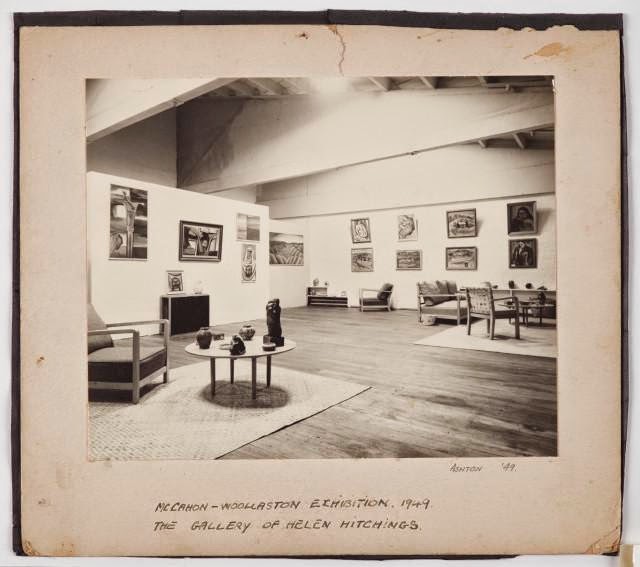
Two examples of gesamtkunstwerk I've been lusting over today: Karl Lagerfield's Memphis Milano-fuelled apartment in Monte Carlo (the Memphis look feels really "now" again to me)


and Helen Hitching's Wellington gallery, currently being evoked in Te Papa's new collection hang:


Thursday, 2 April 2015

Instacash

One of the things I quite like about Instagram is its resistance. You see photos, like photos, comment on photos, follow people, maybe share some behind the scenes stuff.

You can't add links to a photo description. You can't, without significant effort, push people from the Instagram world to a non-Instagram action - like selling tickets or signing up for events. You can't pay Instagram to show more people your photo, so that more people might be tempted into these actions. Given the algorithms that govern what you see on Facebook, and the promoted tweets Twitter is drowning in (or their recent 'Watch the #CWC live' campaign), this feels like a sweet relief - you pick things to look at, you look at the things.

God only knows how long this will last, because all those monetising opportunities must be hella tempting. And of course, people have found ways to cash in round the corners, with endless product placement. (One of my social media rules has become only following people I have met in real life - or am likely to one day - for just this reason. As a result I think the only product placement I've seen on Instagram is a fancy toilet brush care of a New Zealand painter.*)

Which is why this article on ballet dancers' use of Instagram is interesting. Ballet suits Instagram - beautiful photogenic people who enjoy performing, bloody feet, international travel, costumes. And while the companies haven't figured out how to boost tickets sales off the back of hundreds of little red hearts, the dancers are certainly on top of the brand building.

*Or maybe the product placement is so flawless I don't even notice.

Tuesday, 31 March 2015

Yowzers

This lengthy piece on Artnet by Christian Viveros-Fauné eviscerating MOMA curator Klaus Biesenbach, his current critically-panned exhibition on musician Björk, and his "dangerous obsession with pop stars, as well as a growing compulsion to share in their limelight" is one of the most gobsmacking pieces I've ever read on the visual art world.

It's also a slightly worrying indication that soon reporting isn't just going to be based on embedding random tweets, but plundering people's Instagram accounts ...

Sunday, 29 March 2015

The Promised Land

Having regretted for years now not investing in travelling to Sydney for Michael Stevenson's show at the MCA, this weekend I made the call to go to the opening of Michael Parekowhai's The Promised Land at QAGOMA (until 26 June).

I'm so glad I did. I think it is a truly stunning show: an exhibition that subverts the usual tropes of a survey of retrospective while remaining incredibly generous to the viewer.

I am still processing what's going on in this show: the importance Parekowhai places on ideas of navigation, both in his works and in his exhibition design; the concept of the memory palace and time travel explicitly evoked by the exhibition; the way Parekowhai has mashed up and remixed his own career here, both juxtaposing works from disparate series, and remaking older works to display with new ones; the works that have been left out, as much as the works that have been left out.

I'll work this through in time to talk about the show on the radio on the Wednesday after Easter, but in the meantime, here's my favourite thing I heard Parekowhai say in the talks QAGOMA yesterday

And a whole bunch of snaps from the show, which is incredibly inviting to the photographically inclined visitor.


Wednesday, 25 March 2015

On the radio

On the radio today I talked about museum/visual art podcasting, the move to have the land around Michael Heizer's massive work City declared a monument to preserve it from development, and briefly about Tungaru: The Kiribati Project by Chris Charteris and Jeff Fox at Pataka.


Wednesday, 18 March 2015

Selfie selfie selfie

One of the topics I've returned to frequently over the past nearly five years I've been doing my Nine to Noon slot is visitor photography in art galleries. Over that time it's gone from no-no to near normal.

Over the last few months I've spotted an ample handful of articles discussing the great selfie-stick ban of 2015. Most museums and galleries ban tripods and other camera equipment that's bulky and has potential to accidentally damage work or obstruct other visitors, and selfie-sticks are the same. I've avoided talking about this 'new development' in the camera wars because it feels like a beat-up.

Now Koven J. Smith has done a great job of articulating that feeling in this blog post for the Blanton Museum:

But “museums liberalizing photography policies” isn’t a great story for the media, because that story doesn’t make conspicuous use of the popular search term “selfie.” 
I seriously doubt that any of the reporters covering The Ban truly think this is big news. But they (and their editors) do know that any article with the word “selfie” in the title is likely to have waaaaay more page views than an article that doesn’t. And page views and clicks are what matter—the actual story being told is largely irrelevant. It didn’t matter if the real story was “museums are finally allowing photography,” because the hook that would get users to click the link was the word “selfie,” and that’s the quote-unquote angle most of the media went with.


Wednesday, 11 March 2015

On the radio

On the radio today I'll be talking about the Trends Watch report (futurists predict six important trends for museums in the coming years) and, if we have time, visual arts podcasts.

UPDATE: We ran out of time for podcasting, so enjoy the links below, and I'll cover it next time round.

Download the 2015 Trends Watch from the Center for the Future of Museums

The Circuit podcast

The Dowse podcast

A History of the World in 100 objects

Modern Art Notes podcast

Te Papa channel

Art Critics Love Us On Yelp - On the Media

Sunday, 1 March 2015

I've been to the moon


I've been wondering for a while now whether the massive uptake of digital photography and photo sharing (Flickr, Facebook, Twitter, Instagram ...) has/will increase people's interest in and enjoyment of what I will call, for the lack of a better word, "art photography" - the kind of photos we see in galleries, the pieces (Peter Peryer at The Dowse last year, Anne Noble at Bartley + Company just recently) that to me are still differentiated from the motivation and execution of the (often very skilled) everyday photographer.

My gut feeling is - no, not yet. Maybe 'no', full stop. And this article on the sale of a chunk of vintage NASA photographs tickles up that feeling:
At a time when the International Space Station has an Instagram feed, it’s easy to forget the profundity of these pictures and their vistas, and tempting to dilute their impact by re-contextualizing what they represent in today’s terms (see: Buzz Aldrin’s “first space selfie” of 1966 above).